The Grand Vision: Unpacking DeepMind's Ambition to "Solve All Disease"
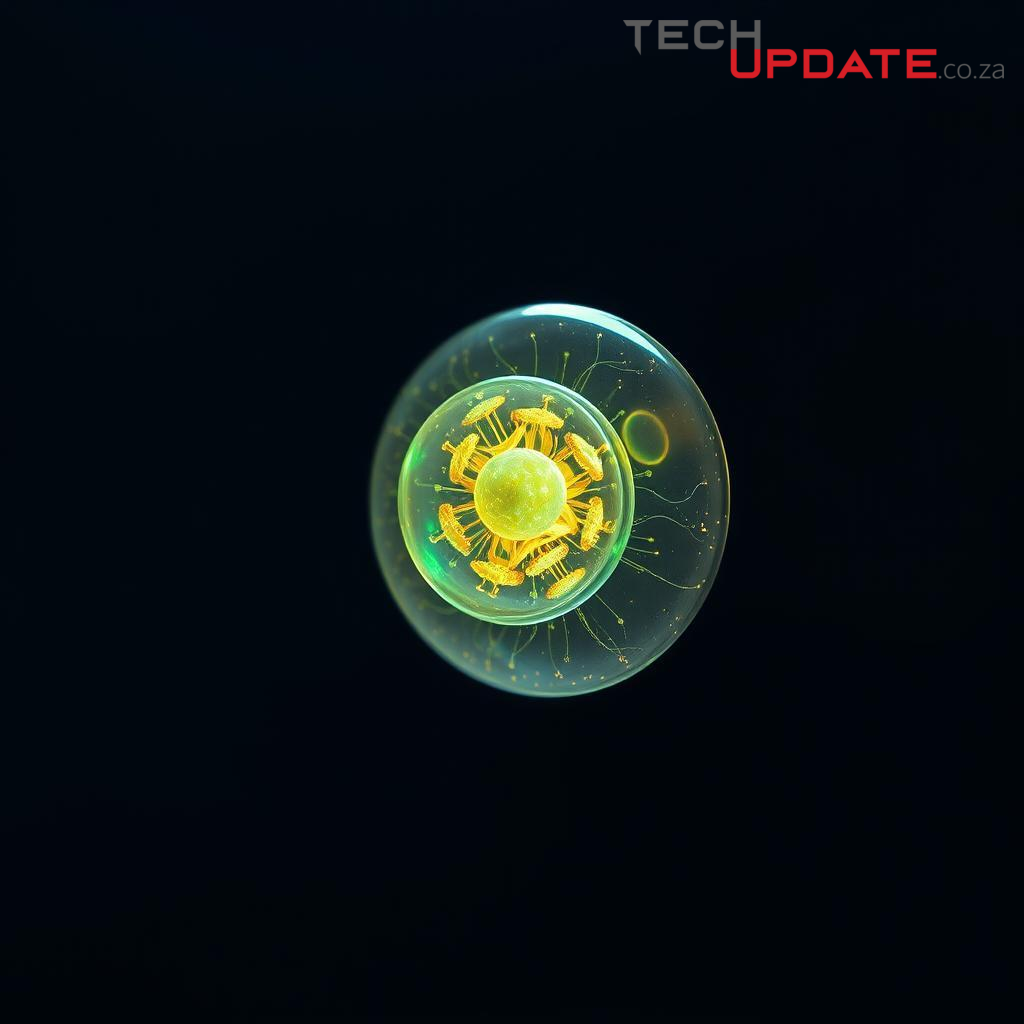
The recent Google I/O keynote saw a declaration that reverberated far beyond the tech world. Demis Hassabis, CEO of Google DeepMind, made a statement that, delivered with striking earnestness, aimed to redefine the horizons of artificial intelligence: his company aspires to "reimagine the drug discovery process with the goal of one day solving all disease." This audacious pronouncement, delivered with a completely deadpan face, warrants a thorough journalistic examination, moving beyond the initial headline grab to dissect its scientific underpinnings, immense challenges, and long-term implications.
The Genesis of a Grand Claim: DeepMind's Legacy in Biological Science
DeepMind is no stranger to groundbreaking achievements in complex domains. Their most celebrated contribution to biology, AlphaFold, fundamentally transformed our understanding of protein structures, a critical bottleneck in drug discovery. By accurately predicting how proteins fold, AlphaFold provided an unprecedented tool for researchers to understand disease mechanisms and design novel therapeutic interventions. This success laid the groundwork for the current ambitious vision, demonstrating AI's capacity to accelerate foundational scientific understanding at an unparalleled scale.
AI in Drug Discovery: Beyond the Hype
Artificial intelligence is already making significant inroads into pharmaceutical research. From identifying potential drug targets and synthesizing novel compounds to optimizing lead candidates and predicting toxicity, AI algorithms are streamlining stages that historically consumed years and billions of dollars. Companies leveraging AI, including DeepMind, aim to reduce the timeline and cost of bringing new medicines to market, thereby addressing unmet medical needs more rapidly. However, the path from target identification to a safe, effective, and approved drug remains arduous, involving rigorous preclinical testing and multi-phase clinical trials, processes AI can inform but not entirely circumvent.
"Solving All Disease": A Nuanced Perspective
Hassabis's vision of "solving all disease" is simultaneously inspiring and fraught with complexity. The term "disease" encompasses an incredibly diverse spectrum: infectious pathogens that evolve continuously, chronic conditions influenced by genetics and lifestyle, autoimmune disorders, neurodegenerative conditions, and various cancers. A singular solution for all these disparate challenges appears, at first glance, to be a formidable, if not impossible, undertaking.
Scientifically, achieving such a goal would require not only a comprehensive understanding of every disease's etiology but also the capacity to develop universally effective, safe, and accessible interventions. It would necessitate overcoming the adaptive nature of biological systems, the variability of human physiology, and the intricate interplay of genetic and environmental factors. Ethically, the pursuit of "solving all disease" also raises profound questions about defining health, managing human enhancement, and ensuring equitable access to such transformative technologies globally.
Expert Outlook and the Road Ahead
While the scientific community widely acknowledges the transformative potential of AI in accelerating drug discovery and biological research, the phrase "solving all disease" is typically viewed as a long-term, aspirational goal rather than an imminent reality. Experts emphasize that AI's greatest immediate impact lies in augmenting human scientists, providing tools to analyze vast datasets, uncover hidden patterns, and generate hypotheses at scales impossible for human cognition alone. The journey toward a future with fewer diseases will likely be characterized by incremental breakthroughs driven by AI-accelerated research, rather than a single, universal "cure-all."
Conclusion: A Visionary Compass for Biomedical Innovation
Demis Hassabis's declaration at Google I/O serves as a powerful testament to the boundless ambition driving Google DeepMind and the broader AI community. While the road to "solving all disease" is undoubtedly long, winding, and filled with unprecedented challenges, the commitment to such a monumental goal acts as a visionary compass, orienting significant resources and brilliant minds toward fundamental advancements in human health. It underscores a future where AI is not merely a tool for efficiency but a partner in humanity's most profound scientific quests, pushing the boundaries of what we once thought possible in medicine.
Resources
- The Verge: 'Solve all diseases,' you say? (Initial reporting on Demis Hassabis's statement at Google I/O 2024)
- Google DeepMind Blog: AlphaFold, a solution to a 50-year-old grand challenge in biology (Insights into DeepMind's foundational work in protein structure prediction)
- Nature: AI for drug discovery is hot — these companies are leading the way (Overview of AI's role and leading companies in pharmaceutical research)
Details
Author
Top articles


 }})
You can now watch HBO Max for $10
Latest articles





You can now watch HBO Max for $10
The recent Google I/O keynote saw a declaration that reverberated far beyond the tech world. Demis Hassabis, CEO of Google DeepMind, made a statement that, delivered with striking earnestness, aimed to redefine the horizons of artificial intelligence: his company aspires to "reimagine the drug discovery process with the goal of one day solving all disease." This audacious pronouncement, delivered with a completely deadpan face, warrants a thorough journalistic examination, moving beyond the initial headline grab to dissect its scientific underpinnings, immense challenges, and long-term implications.
The Genesis of a Grand Claim: DeepMind's Legacy in Biological Science
DeepMind is no stranger to groundbreaking achievements in complex domains. Their most celebrated contribution to biology, AlphaFold, fundamentally transformed our understanding of protein structures, a critical bottleneck in drug discovery. By accurately predicting how proteins fold, AlphaFold provided an unprecedented tool for researchers to understand disease mechanisms and design novel therapeutic interventions. This success laid the groundwork for the current ambitious vision, demonstrating AI's capacity to accelerate foundational scientific understanding at an unparalleled scale.
AI in Drug Discovery: Beyond the Hype
Artificial intelligence is already making significant inroads into pharmaceutical research. From identifying potential drug targets and synthesizing novel compounds to optimizing lead candidates and predicting toxicity, AI algorithms are streamlining stages that historically consumed years and billions of dollars. Companies leveraging AI, including DeepMind, aim to reduce the timeline and cost of bringing new medicines to market, thereby addressing unmet medical needs more rapidly. However, the path from target identification to a safe, effective, and approved drug remains arduous, involving rigorous preclinical testing and multi-phase clinical trials, processes AI can inform but not entirely circumvent.
"Solving All Disease": A Nuanced Perspective
Hassabis's vision of "solving all disease" is simultaneously inspiring and fraught with complexity. The term "disease" encompasses an incredibly diverse spectrum: infectious pathogens that evolve continuously, chronic conditions influenced by genetics and lifestyle, autoimmune disorders, neurodegenerative conditions, and various cancers. A singular solution for all these disparate challenges appears, at first glance, to be a formidable, if not impossible, undertaking.
Scientifically, achieving such a goal would require not only a comprehensive understanding of every disease's etiology but also the capacity to develop universally effective, safe, and accessible interventions. It would necessitate overcoming the adaptive nature of biological systems, the variability of human physiology, and the intricate interplay of genetic and environmental factors. Ethically, the pursuit of "solving all disease" also raises profound questions about defining health, managing human enhancement, and ensuring equitable access to such transformative technologies globally.
Expert Outlook and the Road Ahead
While the scientific community widely acknowledges the transformative potential of AI in accelerating drug discovery and biological research, the phrase "solving all disease" is typically viewed as a long-term, aspirational goal rather than an imminent reality. Experts emphasize that AI's greatest immediate impact lies in augmenting human scientists, providing tools to analyze vast datasets, uncover hidden patterns, and generate hypotheses at scales impossible for human cognition alone. The journey toward a future with fewer diseases will likely be characterized by incremental breakthroughs driven by AI-accelerated research, rather than a single, universal "cure-all."
Conclusion: A Visionary Compass for Biomedical Innovation
Demis Hassabis's declaration at Google I/O serves as a powerful testament to the boundless ambition driving Google DeepMind and the broader AI community. While the road to "solving all disease" is undoubtedly long, winding, and filled with unprecedented challenges, the commitment to such a monumental goal acts as a visionary compass, orienting significant resources and brilliant minds toward fundamental advancements in human health. It underscores a future where AI is not merely a tool for efficiency but a partner in humanity's most profound scientific quests, pushing the boundaries of what we once thought possible in medicine.
Resources
- The Verge: 'Solve all diseases,' you say? (Initial reporting on Demis Hassabis's statement at Google I/O 2024)
- Google DeepMind Blog: AlphaFold, a solution to a 50-year-old grand challenge in biology (Insights into DeepMind's foundational work in protein structure prediction)
- Nature: AI for drug discovery is hot — these companies are leading the way (Overview of AI's role and leading companies in pharmaceutical research)
Top articles
You can now watch HBO Max for $10
Latest articles
You can now watch HBO Max for $10
Similar posts




This is a page that only logged-in people can visit. Don't you feel special? Try clicking on a button below to do some things you can't do when you're logged out.
Example modal
At your leisure, please peruse this excerpt from a whale of a tale.
Chapter 1: Loomings.
Call me Ishmael. Some years ago—never mind how long precisely—having little or no money in my purse, and nothing particular to interest me on shore, I thought I would sail about a little and see the watery part of the world. It is a way I have of driving off the spleen and regulating the circulation. Whenever I find myself growing grim about the mouth; whenever it is a damp, drizzly November in my soul; whenever I find myself involuntarily pausing before coffin warehouses, and bringing up the rear of every funeral I meet; and especially whenever my hypos get such an upper hand of me, that it requires a strong moral principle to prevent me from deliberately stepping into the street, and methodically knocking people's hats off—then, I account it high time to get to sea as soon as I can. This is my substitute for pistol and ball. With a philosophical flourish Cato throws himself upon his sword; I quietly take to the ship. There is nothing surprising in this. If they but knew it, almost all men in their degree, some time or other, cherish very nearly the same feelings towards the ocean with me.
Comment