Anime Russian Roulette Dev Halts Public Demo Over Alarming AI Copycat Threat
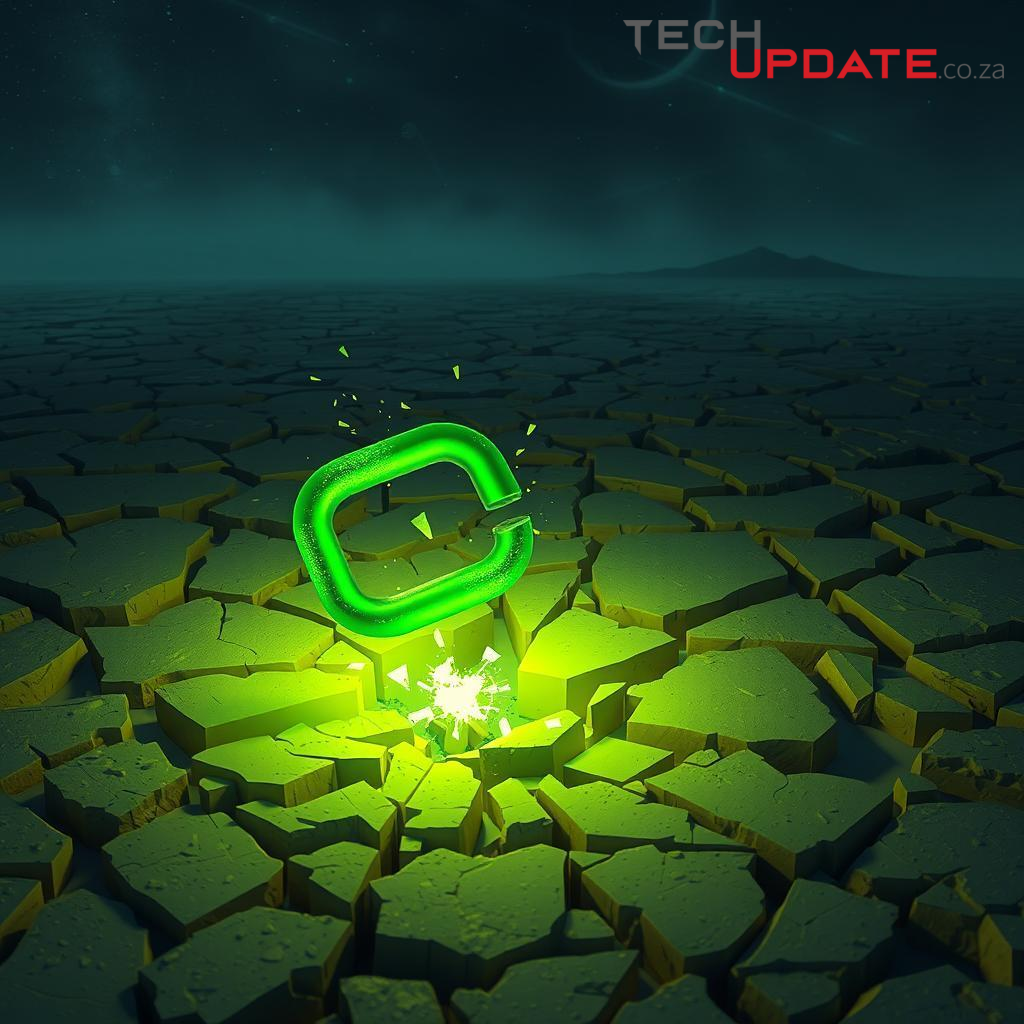
In a preemptive strike against what it perceives as an escalating threat from artificial intelligence-driven imitation, indie developer Alliance Arts has unexpectedly canceled the public demo for its highly anticipated title, Drunken Goddess Reflux. The unique anime-themed Russian roulette game, which combines strategic drinking with deadly stakes, was slated for a public showcase but will now be restricted to closed online play sessions. This abrupt shift underscores a growing apprehension within the gaming industry regarding the rapid proliferation of AI-assisted game cloning.
The Rising Tide of AI-Powered Replication
Alliance Arts articulated its concerns directly, stating that the demo's content could be quickly exploited by generative AI or other sophisticated tools to replicate the game's distinct presentation and gameplay. The developer fears that such imitations could flood the market, potentially launching before their official release. "We're concerned that the demo's content could be used to quickly imitate or replicate the game's presentation and gameplay with AI or other tools, and that such works could be released before our launch," the studio communicated. This decision, while disappointing for many eagerly awaiting the demo, highlights a developer's struggle to protect intellectual property in an era where digital content can be rapidly analyzed and reproduced.
Furthermore, the studio expressed difficulties in effectively managing content restrictions for posting and streaming from an open demo. By distributing demo keys and gathering feedback through a private Discord group, Alliance Arts aims to maintain a tighter control loop and mitigate the risks associated with widespread public access.
A Precedent of Fast-Tracked Imitation
The fears articulated by Alliance Arts are far from unfounded. The gaming landscape, particularly on platforms like Steam, has witnessed a surge in copycat titles. A stark example is the recent phenomenon surrounding Needle in a Haystack. After its announcement and a viral clip showcasing its deliberately tedious gameplay, numerous clones swiftly appeared online. A quick search reveals several near-identical games, often released within weeks of each other, suggesting a highly expedited development process.
The brief and rapid turnaround, coupled with familiar visual styles—often characterized by a distinctive "yellow filter"—and almost identical gameplay mechanics, strongly implicates generative AI tools in their creation. While explicit disclosure of AI usage remains rare, the speed and uncanny resemblance of these imitations point to significant AI assistance in generating code, assets, and game design concepts.
Another instance of rapid imitation can be seen with the multiplayer hit Meccha Chameleon, which, shortly after its release, inspired a wave of games that mimicked its hide-and-seek formula, often with noticeably less refined art direction.
The AI Frontier for Game Decompilation
The potential for advanced AI models, such as Claude 5.5, to facilitate the decompilation of game code into browser-playable formats further amplifies the developers' apprehension. It is no longer an implausible scenario for malicious actors to utilize a demo's underlying code to generate a near-perfect replica, subsequently listing it for sale on digital storefronts. This technological capability significantly lowers the barrier to entry for creating sophisticated clones, posing a direct threat to developers' investment in originality and innovation.
Strategic Retreat Before Steam Next Fest
The cancellation of the Drunken Goddess Reflux demo comes just before the bustling Steam Next Fest, an event that has, at times, become oversaturated with thousands of competing demos. While the decision might mean missing out on significant exposure during the festival, it could also be a strategic move to prevent the game from being buried amidst the deluge of other titles. Notably, Drunken Goddess Reflux is already one of the top 100 most-wishlisted games on Steam, indicating substantial player interest without the need for an immediate public demo.
For those unfamiliar, Drunken Goddess Reflux promises a unique blend of dark fantasy and risk-taking, where players engage in a deadly game of Russian roulette with a demonic Tsundere character. The core mechanic involves drinking to improve odds, making it a "game of shots and shots" where intoxication can be the key to survival. The game is slated for an official PC launch on December 8.
Conclusion
Alliance Arts' decision to withdraw its public demo for Drunken Goddess Reflux serves as a stark indicator of the evolving challenges faced by game developers in the age of generative AI. The ease with which AI tools can facilitate content replication and game cloning forces studios to re-evaluate traditional release strategies and intellectual property protection. While the move to closed play sessions aims to safeguard their unique creation, it also highlights the pressing need for the industry to adapt to new forms of digital piracy and imitation. The battle for originality in game development is increasingly being fought on the shifting sands of artificial intelligence capabilities.
Resources
Details
Author
Top articles


 }})
You can now watch HBO Max for $10
Latest articles


You can now watch HBO Max for $10
In a preemptive strike against what it perceives as an escalating threat from artificial intelligence-driven imitation, indie developer Alliance Arts has unexpectedly canceled the public demo for its highly anticipated title, Drunken Goddess Reflux. The unique anime-themed Russian roulette game, which combines strategic drinking with deadly stakes, was slated for a public showcase but will now be restricted to closed online play sessions. This abrupt shift underscores a growing apprehension within the gaming industry regarding the rapid proliferation of AI-assisted game cloning.
The Rising Tide of AI-Powered Replication
Alliance Arts articulated its concerns directly, stating that the demo's content could be quickly exploited by generative AI or other sophisticated tools to replicate the game's distinct presentation and gameplay. The developer fears that such imitations could flood the market, potentially launching before their official release. "We're concerned that the demo's content could be used to quickly imitate or replicate the game's presentation and gameplay with AI or other tools, and that such works could be released before our launch," the studio communicated. This decision, while disappointing for many eagerly awaiting the demo, highlights a developer's struggle to protect intellectual property in an era where digital content can be rapidly analyzed and reproduced.
Furthermore, the studio expressed difficulties in effectively managing content restrictions for posting and streaming from an open demo. By distributing demo keys and gathering feedback through a private Discord group, Alliance Arts aims to maintain a tighter control loop and mitigate the risks associated with widespread public access.
A Precedent of Fast-Tracked Imitation
The fears articulated by Alliance Arts are far from unfounded. The gaming landscape, particularly on platforms like Steam, has witnessed a surge in copycat titles. A stark example is the recent phenomenon surrounding Needle in a Haystack. After its announcement and a viral clip showcasing its deliberately tedious gameplay, numerous clones swiftly appeared online. A quick search reveals several near-identical games, often released within weeks of each other, suggesting a highly expedited development process.
The brief and rapid turnaround, coupled with familiar visual styles—often characterized by a distinctive "yellow filter"—and almost identical gameplay mechanics, strongly implicates generative AI tools in their creation. While explicit disclosure of AI usage remains rare, the speed and uncanny resemblance of these imitations point to significant AI assistance in generating code, assets, and game design concepts.
Another instance of rapid imitation can be seen with the multiplayer hit Meccha Chameleon, which, shortly after its release, inspired a wave of games that mimicked its hide-and-seek formula, often with noticeably less refined art direction.
The AI Frontier for Game Decompilation
The potential for advanced AI models, such as Claude 5.5, to facilitate the decompilation of game code into browser-playable formats further amplifies the developers' apprehension. It is no longer an implausible scenario for malicious actors to utilize a demo's underlying code to generate a near-perfect replica, subsequently listing it for sale on digital storefronts. This technological capability significantly lowers the barrier to entry for creating sophisticated clones, posing a direct threat to developers' investment in originality and innovation.
Strategic Retreat Before Steam Next Fest
The cancellation of the Drunken Goddess Reflux demo comes just before the bustling Steam Next Fest, an event that has, at times, become oversaturated with thousands of competing demos. While the decision might mean missing out on significant exposure during the festival, it could also be a strategic move to prevent the game from being buried amidst the deluge of other titles. Notably, Drunken Goddess Reflux is already one of the top 100 most-wishlisted games on Steam, indicating substantial player interest without the need for an immediate public demo.
For those unfamiliar, Drunken Goddess Reflux promises a unique blend of dark fantasy and risk-taking, where players engage in a deadly game of Russian roulette with a demonic Tsundere character. The core mechanic involves drinking to improve odds, making it a "game of shots and shots" where intoxication can be the key to survival. The game is slated for an official PC launch on December 8.
Conclusion
Alliance Arts' decision to withdraw its public demo for Drunken Goddess Reflux serves as a stark indicator of the evolving challenges faced by game developers in the age of generative AI. The ease with which AI tools can facilitate content replication and game cloning forces studios to re-evaluate traditional release strategies and intellectual property protection. While the move to closed play sessions aims to safeguard their unique creation, it also highlights the pressing need for the industry to adapt to new forms of digital piracy and imitation. The battle for originality in game development is increasingly being fought on the shifting sands of artificial intelligence capabilities.
Resources
Top articles
You can now watch HBO Max for $10
Latest articles
You can now watch HBO Max for $10
Similar posts
This is a page that only logged-in people can visit. Don't you feel special? Try clicking on a button below to do some things you can't do when you're logged out.
Example modal
At your leisure, please peruse this excerpt from a whale of a tale.
Chapter 1: Loomings.
Call me Ishmael. Some years ago—never mind how long precisely—having little or no money in my purse, and nothing particular to interest me on shore, I thought I would sail about a little and see the watery part of the world. It is a way I have of driving off the spleen and regulating the circulation. Whenever I find myself growing grim about the mouth; whenever it is a damp, drizzly November in my soul; whenever I find myself involuntarily pausing before coffin warehouses, and bringing up the rear of every funeral I meet; and especially whenever my hypos get such an upper hand of me, that it requires a strong moral principle to prevent me from deliberately stepping into the street, and methodically knocking people's hats off—then, I account it high time to get to sea as soon as I can. This is my substitute for pistol and ball. With a philosophical flourish Cato throws himself upon his sword; I quietly take to the ship. There is nothing surprising in this. If they but knew it, almost all men in their degree, some time or other, cherish very nearly the same feelings towards the ocean with me.
Comment