Verizon Escalates Legal Battle Against T-Mobile Over Alleged False Advertising Claims
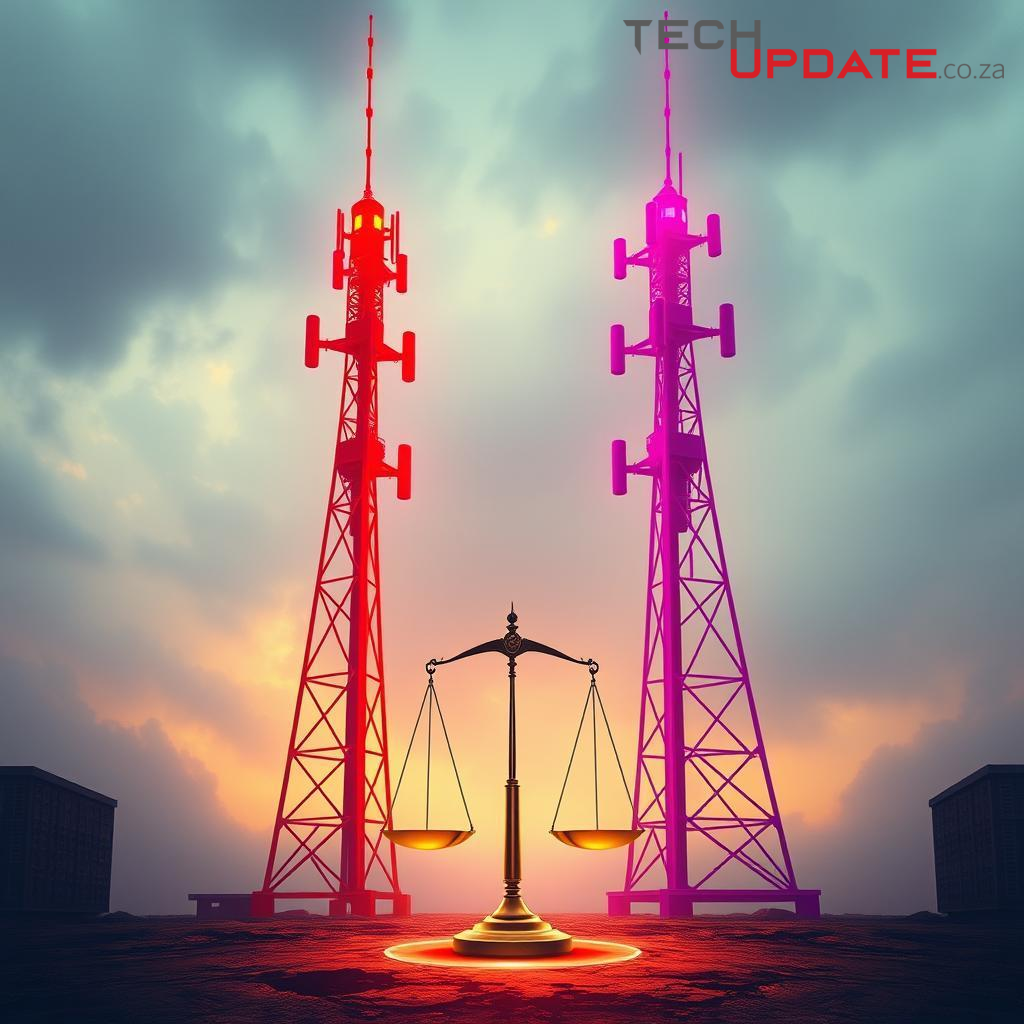
A Clash of Telecom Titans in the Courtroom
In an increasingly competitive telecommunications landscape, Verizon has taken legal action against rival T-Mobile, filing a lawsuit that alleges false advertising. The dispute centers on claims made by T-Mobile regarding its network performance and 5G capabilities, which Verizon asserts are misleading to consumers.
The legal filing follows a period where Verizon reportedly attempted to resolve the matter outside of court. According to sources close to the situation, Verizon had previously communicated its concerns to T-Mobile, providing an opportunity for the Un-carrier to modify its advertising campaigns. However, with those efforts reportedly proving unsuccessful, Verizon has now opted for a judicial resolution, signaling a heightened intensity in the ongoing rivalry between the two major wireless carriers.
The Core of Verizon's Allegations
Verizon's complaint specifically targets T-Mobile's advertisements that purportedly misrepresent its network’s coverage, speed, and reliability. Such claims in the highly competitive mobile sector can significantly influence consumer decisions, making accurate and truthful marketing paramount. Verizon argues that T-Mobile's "uncarrier" marketing, while often innovative, crosses the line into deceptive territory, potentially harming both consumers and competitors.
The lawsuit underscores a critical aspect of advertising law: the necessity for claims to be substantiated. False advertising not only undermines consumer trust but can also create an unfair advantage in the marketplace. Verizon is seeking injunctive relief to compel T-Mobile to cease the contested advertising, alongside potential damages for harm allegedly caused by the misleading campaigns.
Industry Implications and Consumer Impact
This legal confrontation is more than just a dispute between two corporations; it reflects the intense battle for market share in the rapidly evolving 5G era. As carriers invest heavily in deploying and promoting their next-generation networks, the stakes for accurate representation are exceptionally high. The outcome of this lawsuit could set precedents for how wireless carriers advertise their network performance and services in the future.
For consumers, the lawsuit highlights the importance of scrutinizing marketing claims. Should Verizon's allegations prove true, it would underscore the need for greater transparency from service providers. Ultimately, a fair and competitive market benefits consumers through clearer choices and better services, free from misleading information.
Summary
Verizon's lawsuit against T-Mobile for alleged false advertising marks a significant escalation in the rivalry between two of America's largest wireless providers. Stemming from T-Mobile's purported failure to adjust its marketing after Verizon raised concerns, the legal challenge aims to address claims regarding network performance and 5G capabilities. This case not only carries implications for the advertising practices within the telecommunications industry but also emphasizes the ongoing need for transparency and truthfulness in consumer marketing.
Resources
- Fierce Wireless
- Light Reading
- CNET
Details
Author
Top articles





 }})
You can now watch HBO Max for $10
Latest articles





You can now watch HBO Max for $10
A Clash of Telecom Titans in the Courtroom
In an increasingly competitive telecommunications landscape, Verizon has taken legal action against rival T-Mobile, filing a lawsuit that alleges false advertising. The dispute centers on claims made by T-Mobile regarding its network performance and 5G capabilities, which Verizon asserts are misleading to consumers.
The legal filing follows a period where Verizon reportedly attempted to resolve the matter outside of court. According to sources close to the situation, Verizon had previously communicated its concerns to T-Mobile, providing an opportunity for the Un-carrier to modify its advertising campaigns. However, with those efforts reportedly proving unsuccessful, Verizon has now opted for a judicial resolution, signaling a heightened intensity in the ongoing rivalry between the two major wireless carriers.
The Core of Verizon's Allegations
Verizon's complaint specifically targets T-Mobile's advertisements that purportedly misrepresent its network’s coverage, speed, and reliability. Such claims in the highly competitive mobile sector can significantly influence consumer decisions, making accurate and truthful marketing paramount. Verizon argues that T-Mobile's "uncarrier" marketing, while often innovative, crosses the line into deceptive territory, potentially harming both consumers and competitors.
The lawsuit underscores a critical aspect of advertising law: the necessity for claims to be substantiated. False advertising not only undermines consumer trust but can also create an unfair advantage in the marketplace. Verizon is seeking injunctive relief to compel T-Mobile to cease the contested advertising, alongside potential damages for harm allegedly caused by the misleading campaigns.
Industry Implications and Consumer Impact
This legal confrontation is more than just a dispute between two corporations; it reflects the intense battle for market share in the rapidly evolving 5G era. As carriers invest heavily in deploying and promoting their next-generation networks, the stakes for accurate representation are exceptionally high. The outcome of this lawsuit could set precedents for how wireless carriers advertise their network performance and services in the future.
For consumers, the lawsuit highlights the importance of scrutinizing marketing claims. Should Verizon's allegations prove true, it would underscore the need for greater transparency from service providers. Ultimately, a fair and competitive market benefits consumers through clearer choices and better services, free from misleading information.
Summary
Verizon's lawsuit against T-Mobile for alleged false advertising marks a significant escalation in the rivalry between two of America's largest wireless providers. Stemming from T-Mobile's purported failure to adjust its marketing after Verizon raised concerns, the legal challenge aims to address claims regarding network performance and 5G capabilities. This case not only carries implications for the advertising practices within the telecommunications industry but also emphasizes the ongoing need for transparency and truthfulness in consumer marketing.
Resources
- Fierce Wireless
- Light Reading
- CNET
Top articles
You can now watch HBO Max for $10
Latest articles
You can now watch HBO Max for $10
Similar posts



This is a page that only logged-in people can visit. Don't you feel special? Try clicking on a button below to do some things you can't do when you're logged out.
Example modal
At your leisure, please peruse this excerpt from a whale of a tale.
Chapter 1: Loomings.
Call me Ishmael. Some years ago—never mind how long precisely—having little or no money in my purse, and nothing particular to interest me on shore, I thought I would sail about a little and see the watery part of the world. It is a way I have of driving off the spleen and regulating the circulation. Whenever I find myself growing grim about the mouth; whenever it is a damp, drizzly November in my soul; whenever I find myself involuntarily pausing before coffin warehouses, and bringing up the rear of every funeral I meet; and especially whenever my hypos get such an upper hand of me, that it requires a strong moral principle to prevent me from deliberately stepping into the street, and methodically knocking people's hats off—then, I account it high time to get to sea as soon as I can. This is my substitute for pistol and ball. With a philosophical flourish Cato throws himself upon his sword; I quietly take to the ship. There is nothing surprising in this. If they but knew it, almost all men in their degree, some time or other, cherish very nearly the same feelings towards the ocean with me.
Comment